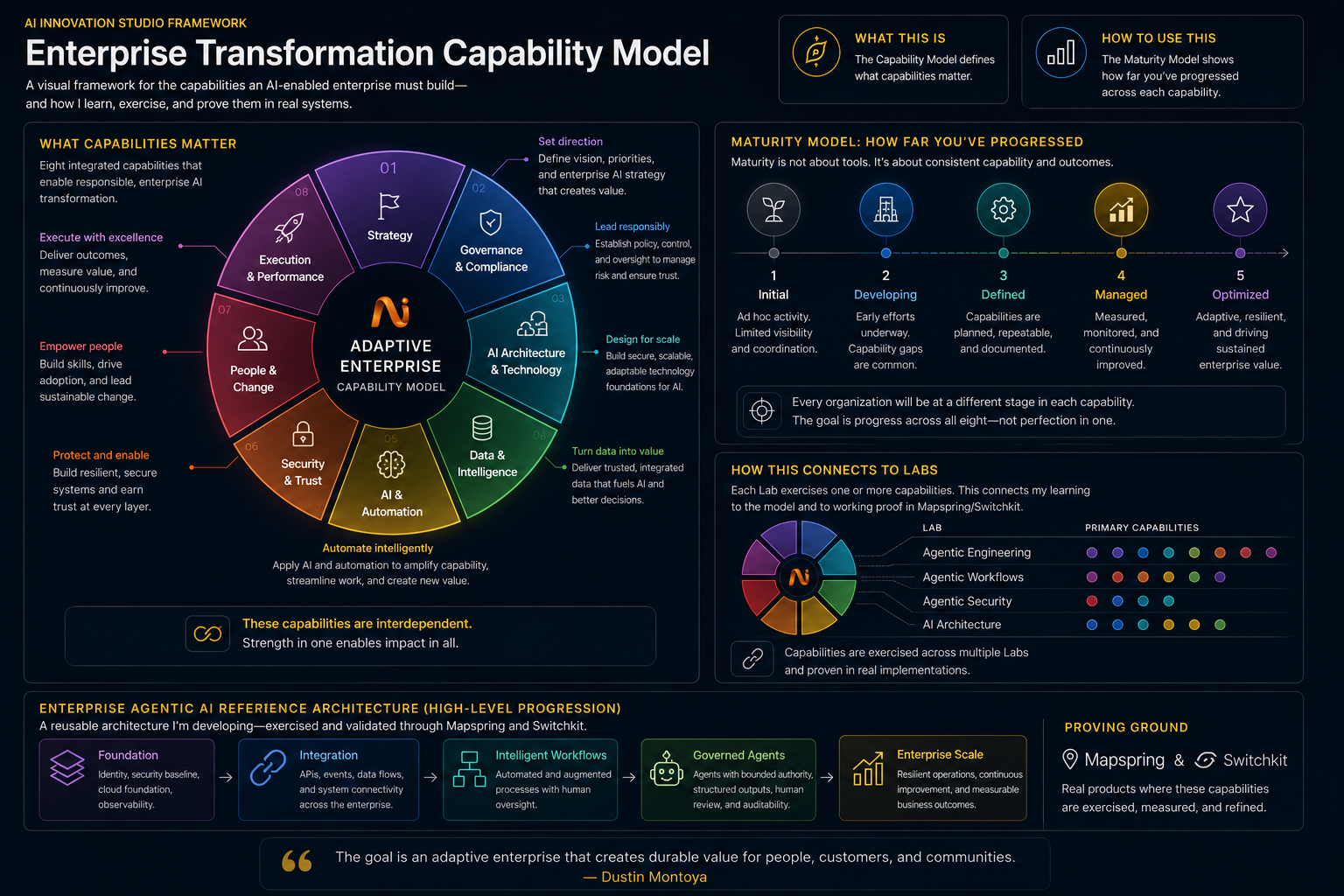
HOW WE TRANSFORM

Enterprise Transformation Framework

A repeatable methodology for understanding the enterprise, identifying priorities, designing the future state, delivering change, operationalizing value, and evolving continuously.

  1. 01Discover
  2. 02Assess
  3. 03Design
  4. 04Build
  5. 05Operate
  6. 06Evolve

Phase 01

Discover

Understand the organization before prescribing solutions.

Representative activities

  • Executive and stakeholder interviews
  • Business and member strategy review
  • Current initiatives and pain points
  • Technology and vendor landscape
  • Current-state operating model
  • Regulatory, risk, and organizational context

Typical deliverables

  • Enterprise Discovery Report
  • Stakeholder and priority map
  • Current-state summary
  • Initial opportunity themes

Phase 02

Assess

Evaluate current maturity, readiness, risk, and capability gaps.

Representative activities

  • Transformation Operating Model assessment
  • Governance and strategy maturity
  • Architecture and data maturity
  • AI and automation readiness
  • Security and risk assessment
  • People, change, and execution readiness

Typical deliverables

  • Transformation Assessment
  • Maturity scorecard
  • Gap and risk analysis
  • Prioritized opportunities

Phase 03

Design

Define the future state and sequence the path forward.

Representative activities

  • Target operating model
  • Reference architecture
  • Use-case portfolio
  • Buy-versus-build analysis
  • Roadmap and investment sequencing
  • Business case and value measures

Typical deliverables

  • Transformation Blueprint
  • Target-state architecture
  • Prioritized roadmap
  • Business case
  • Executive decision package

Phase 04

Build

Turn the approved design into working capabilities.

Representative activities

  • Engineering and integration
  • Process automation
  • Data enablement
  • AI implementation
  • Testing and assurance
  • Change enablement
  • Partner and vendor coordination

Typical deliverables

  • Implemented capabilities
  • Validated releases
  • Automation assets
  • Operating procedures
  • Adoption materials

Phase 05

Operate

Institutionalize governance, performance, reliability, and value realization.

Representative activities

  • Operating governance
  • KPI and outcome tracking
  • Security and AI assurance
  • Model and solution monitoring
  • Vendor and service management
  • Executive steering
  • Continuous optimization

Typical deliverables

  • Operating scorecard
  • Governance cadence
  • Monitoring framework
  • Value-realization report
  • Optimization backlog

Phase 06

Evolve

Continuously adapt the operating model, roadmap, and capability portfolio.

Representative activities

  • Maturity reassessment
  • Roadmap refresh
  • Innovation pipeline
  • New use-case evaluation
  • Architecture evolution
  • Capability optimization
  • Emerging-technology review

Typical deliverables

  • Refreshed transformation roadmap
  • Updated maturity assessment
  • Prioritized innovation portfolio
  • Next-stage investment plan

Executive application

Applied as a 30-60-90-Day Executive Plan

First 30 days

Discover and begin Assess.

Days 31–60

Complete Assess, begin Design, and identify early actions.

Days 61–90

Establish the roadmap, launch selected Build activities, and define the Operate governance model.

The phases overlap in practice and are not rigid sequential gates. Evolve begins as the foundation for continuous adaptation is established.

Scales with the mission

One discipline, adaptable scope.

The framework scales from a focused diagnostic to a multi-year enterprise transformation. Scope, depth, and delivery ownership change; the underlying discipline remains consistent.

  • Executive leadership
  • Advisory engagements
  • Modernization programs
  • AI and automation initiatives
  • Partner-led delivery